
Pet Obesity in Dubai: The Air-Conditioned Epidemic
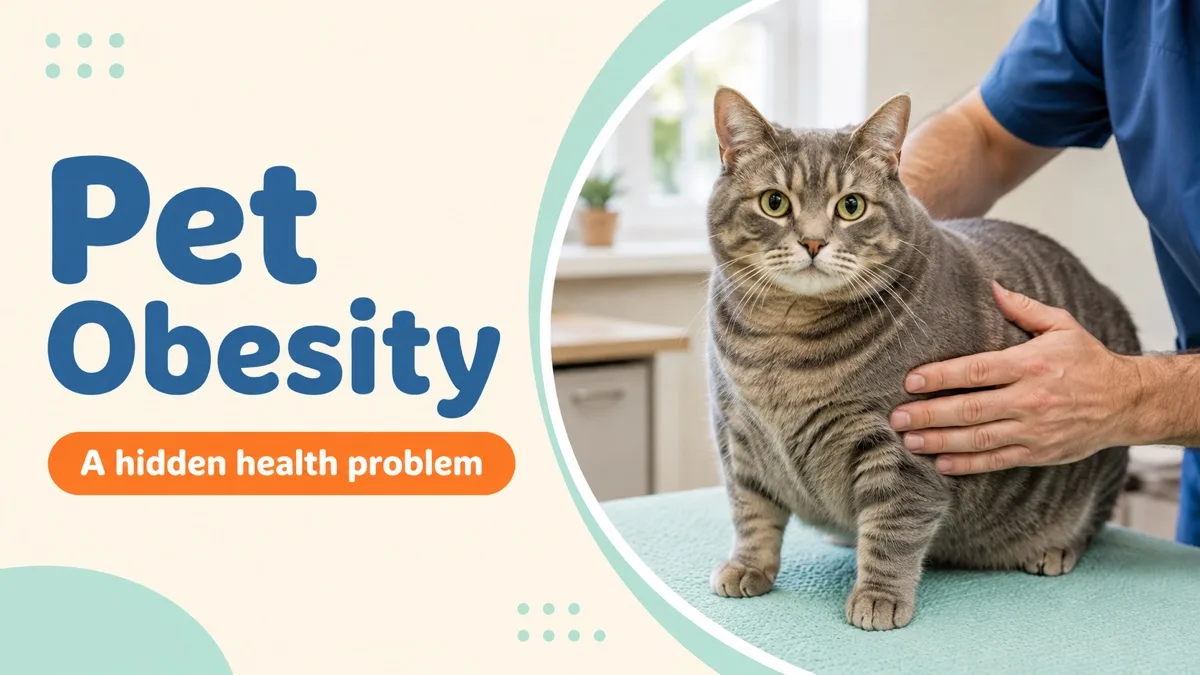
Pet obesity is the most common condition we see and the one owners are least likely to have come in about. It arrives without a symptom, over years, in animals whose owners are attentive and well intentioned, and by the time anybody names it the extra weight has already been carried long enough to cost joints and comfort.
It also has a specific local driver, which is why advice written for a temperate country lands badly here. This page is about what the extra weight is doing to your animal and how it comes off — not about setting a portion, which is a separate question with a separate answer.
Six months of heat removes half the exercise year
A dog in Dubai gets a proper walking year of about six months. The other six he spends largely indoors by necessity, and the weight he puts on during them cannot be walked off until the weather turns — which is why an animal who enters May already heavy tends to leave September heavier still. That is a one-way ratchet, and it does not exist in the climates most feeding advice is written for.
It also means the window for doing something is the cool half, not the hot one. Starting in October gives you the only months in which the exercise side of the equation is available at all; starting in June leaves diet doing the entire job alone, which is slower and harder on the animal.
Cats have it more concentrated still. A cat in a Dubai flat has no outdoor territory to patrol, no reason to hunt, no seasonal change of any kind, and a bowl that is usually full. Her ancestors spent most of their waking hours acquiring food; she acquires it by walking four metres. That gap is the whole problem, and no adjustment to the bag fixes it on its own.
The scale is the weakest of the three measurements
Weight in kilograms means little without a starting point, and most owners do not have one. What you can do without any equipment is feel. Run your hands along his sides — the ribs should be findable under a thin covering, without pressing hard to reach them. Look down at him from above and you should see a waist behind the ribcage. Look from the side and the belly should tuck up rather than run level.
Small absolute numbers matter far more than they sound in cats. On a four-kilo cat, half a kilo is more than a tenth of her body weight — the equivalent proportion on an adult person is dramatic, and nobody would call it a rounding error. This is why a cat can be genuinely obese while looking, to an owner who sees her every day, entirely normal.
What the extra weight is actually doing
Joints carry it first, and the effect compounds — a heavier animal moves less, loses muscle, and becomes heavier still. Overweight animals also handle heat considerably worse, which in this country is not an abstract concern but the difference between a walk in September that is uncomfortable and one that becomes an emergency.
In cats, carrying excess weight is associated with a meaningfully higher risk of diabetes, and that is the single strongest argument for taking a fat cat seriously years before anything looks wrong. Across both species it raises the risk attached to any anaesthetic — so the animal most likely to need a dental or a lump removed is also the one for whom the procedure carries the most risk.
None of that is stated to alarm. It is stated because obesity is usually treated as cosmetic, and it is the one common condition where reversing it early genuinely changes what the next few years look like.
Owners are rarely the reason, and blaming them stalls the fix
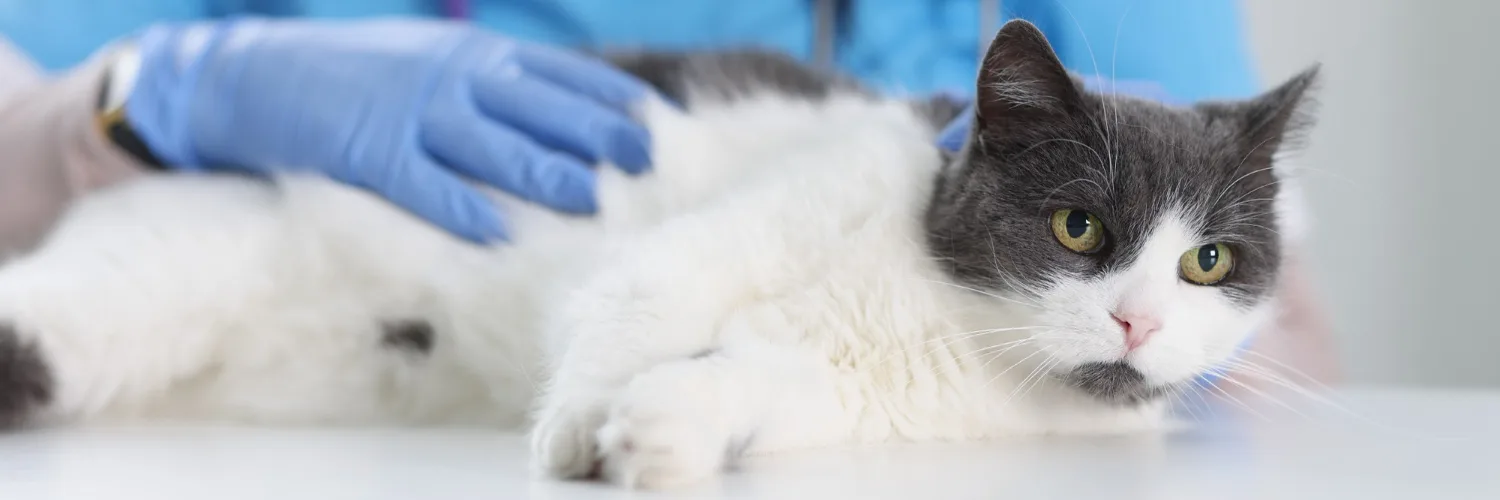
Almost every overweight animal we see got there through drift rather than indulgence. Neutering lowers energy requirements while appetite carries on unchanged, and the portion set before the operation is now too large. Several people feed the same animal without discussing it — a partner, children, a helper, a neighbour with a soft spot. Dry food is left down all day, so nobody can say what actually went in.
The reason this matters is practical: households that feel judged stop reporting accurately, and a weight plan built on inaccurate reporting fails. We would rather hear that the dog gets a biscuit from three different people than have him lose nothing for two months while everybody insists he is on his portion. The arithmetic of setting that portion in the first place, for cats as well as dogs, is on our nutrition guide page.
Weight comes off slowly, and in cats it must be supervised
The correct pace is undramatic — a small percentage of body weight a month, sustained over months, with weigh-ins to confirm the direction. Fast loss costs muscle rather than fat, and the animal ends up lighter and weaker rather than lighter and fitter.
In cats there is a harder rule. An overweight cat who suddenly stops eating, or is put on a severe restriction, can develop a serious liver condition within days — which means a crash diet is not merely ineffective in a cat, it is dangerous. Feline weight loss belongs on a plan agreed with a vet, with a target, a measured amount and a recheck date, not on an owner’s decision to halve the bowl. What the plan looks like for your animal is set at a preventive care exam, where the weight and body condition score are recorded so the next visit has something to compare against.
What it costs
At Petbook the consultation at which the weight, the body condition score and the target are set is AED 120, a published price rather than an estimate. The part of it that decides the outcome is not the examination but the two things written down at the end of it: an amount everybody in the household agrees to, and a date to weigh him again — a plan without a second measurement is a wish. Blood testing, which is worth doing before a weight problem is assumed to be only a feeding problem, is quoted individually, so message us on WhatsApp for a same-day quote.
Older animals are judged differently
Muscle and fat can move in opposite directions at the same time in an older animal, and the scale reports only their sum — which is why a stable weight in a senior pet is a reason to look more closely rather than a reassurance. What your hands find and what the scale says are, at that age, two different pieces of information.
The reverse also holds: weight falling off an older cat who is eating normally is not a diet working, it is a finding, and it needs blood work rather than congratulation. This is the main reason the examination interval tightens with age, and what else changes for an animal in that stage is on our senior pets page.