
Moving to Dubai With a Pet: The First Vet Checklist After Arrival

Moving to Dubai with a pet usually gets planned as a logistics problem — crate, airline, agent, arrival paperwork — and then stops the moment the crate is opened in the new flat. The veterinary half of the move begins there rather than ending there, and most owners do not realise there is a veterinary half at all until something goes wrong in the first month.
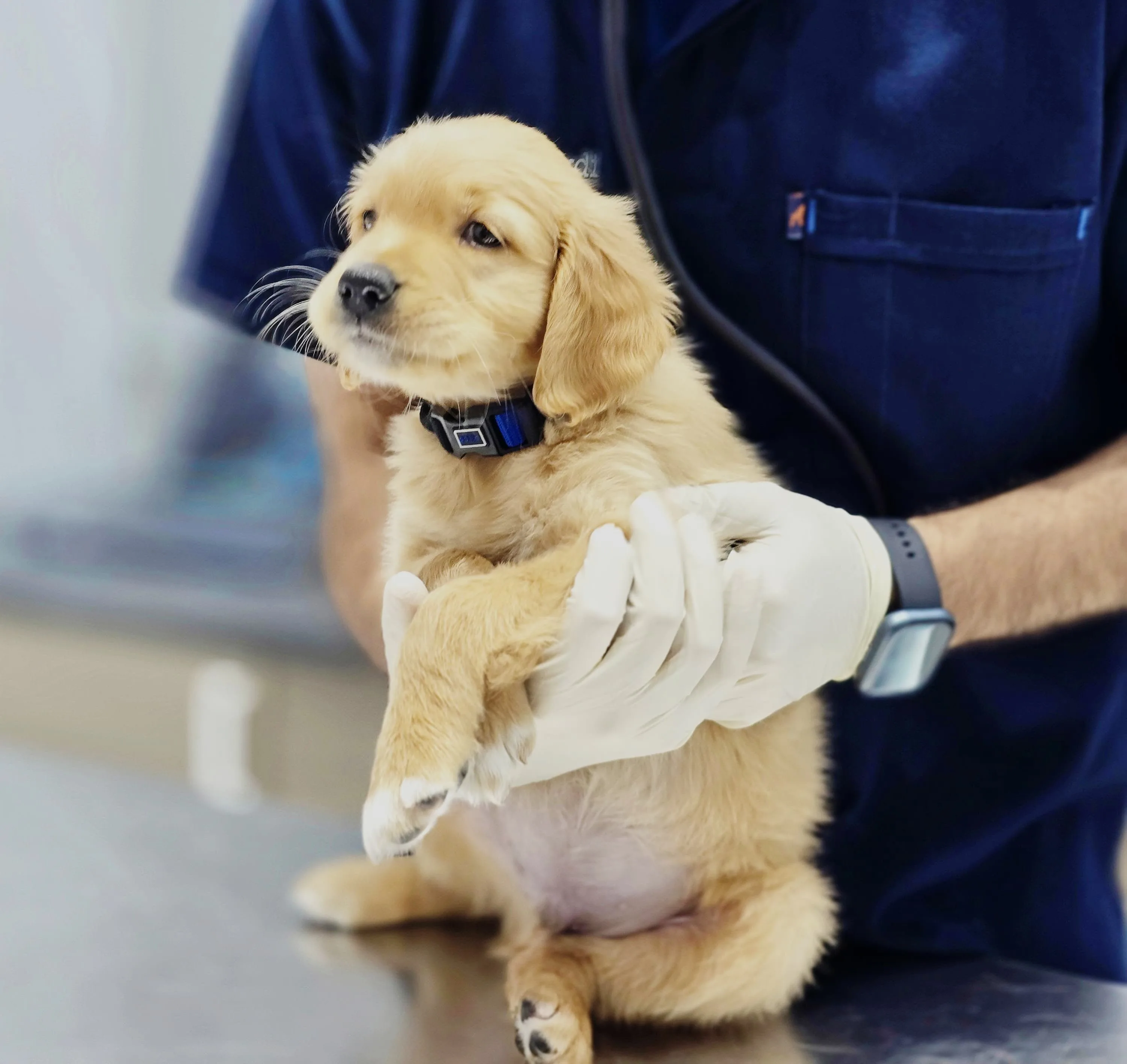
This is what the first appointment after arrival is for, and why it is worth booking in the first fortnight rather than at the first symptom. It does not cover the import process; by the time an animal is standing in your living room, that part is behind you.
The first week is recovery, not routine
A relocated animal has spent many hours in a crate, in noise, without a reliable drink. He arrives tired, dehydrated to some degree, and disoriented by a flat that smells of nothing he knows. Poor appetite, loose stool, and either clinging to you or hiding under furniture are common in the first days and usually settle on their own.
What does not belong in that category is an animal who will not drink, whose breathing looks laboured, who is straining without producing anything, or who has blood anywhere. Those are reasons to call rather than to wait out — and because everything is unfamiliar, you have less baseline than usual to judge against.
Keep the first week small. The same food he was eating before the flight, one quiet room to start in, and no visitors queuing to meet him. A diet change stacked on top of a relocation gives you two problems and no way to tell them apart.
Heat is an adjustment his body has to make, not a preference
An animal arriving from a cold or temperate country has spent his life at temperatures this city does not reach for half the year. Acclimatisation is a real physiological process that takes weeks, and during it he is less tolerant of heat than a resident animal of the same breed and age.
The practical consequence is that the walk has to change before he does. Early morning and late evening, shorter than he is used to, water available before and after, and a hard rule that a dog who slows down or looks for shade is finished for that session rather than encouraged onward. Thick-coated northern breeds and flat-faced dogs carry the most risk, and they are also the two groups most likely to have come from exactly the climate that suited them.
The first summer after arrival is the one to be careful in. By the second, both of you will have learned the rhythm of the year here.
The parasite calendar he came from does not apply here
In much of Europe and North America, parasite prevention is seasonal — it runs through the warm months and pauses. There is no equivalent pause in this region, and a schedule carried over unchanged from the old country leaves a gap that the local tick population is happy to use.
Bring the packaging or a photograph of whatever he was last given, along with the date. The window between his final dose abroad and his first dose here is the part worth closing quickly, and it is easy to close once somebody can see what he was actually on.
The record travels; its validity does not always travel with it
Doses given abroad are normally accepted where the documentation is clear enough to be read and matched to the animal, though whether a particular record holds together is a judgement made at the appointment rather than an assumption to travel on. What varies more is scheduling. Courses are built differently in different countries, some products are not the ones used here, and a dose that was due in the month you were packing very often did not happen.
So bring the record itself rather than a summary of it, and expect the first appointment to spend time matching foreign doses onto the programme used locally. A product given abroad can sit at a different point in the schedule here, which changes when the next one falls due rather than whether the last one counted. How that matching is done is on our vaccination catch-up page.
Registration begins with the number under the skin
Everything administrative in this country hangs off the microchip. The number read by a scanner has to be the number printed on the rabies certificate, which has to be the number on the import paperwork, which has to be the number that goes onto the registration.
Mismatches are more common than you would expect, usually as a transcription error somewhere in the chain rather than anything sinister — and they are far cheaper to correct in the first month than in the week you are trying to leave the country again. We scan at the first appointment before anything else, precisely because a single wrong digit stops the rest of the process. What registration then involves is on our page about how to register your pet.
The clinic decision is better made before the first emergency
Most new arrivals select a veterinary practice during their first emergency, at night, from a search result. That is a poor way to make the decision, and it is entirely avoidable — one non-urgent visit in the first fortnight tells you how the place is run, gets a file opened, and means that the next call is to somebody who has already met your animal.
Distance matters here more than it looks on a map, because it is measured in traffic rather than kilometres. If you have landed on the older side of the creek, the practicalities of getting to us are set out on our page for owners coming from Deira.
What the first appointment costs
The arrival check is a consultation, which is AED 120. For an animal who has travelled reasonably well that is usually the whole of it — anything the visit turns up, whether a missing dose, a parasite treatment or bloodwork, is priced with the service it belongs to rather than added to the appointment. That is a published price rather than an estimate, and the rest of what a new resident has to sort out is on our owner guide.