
Pet Poisoning in Dubai Homes: The Everyday Hazards
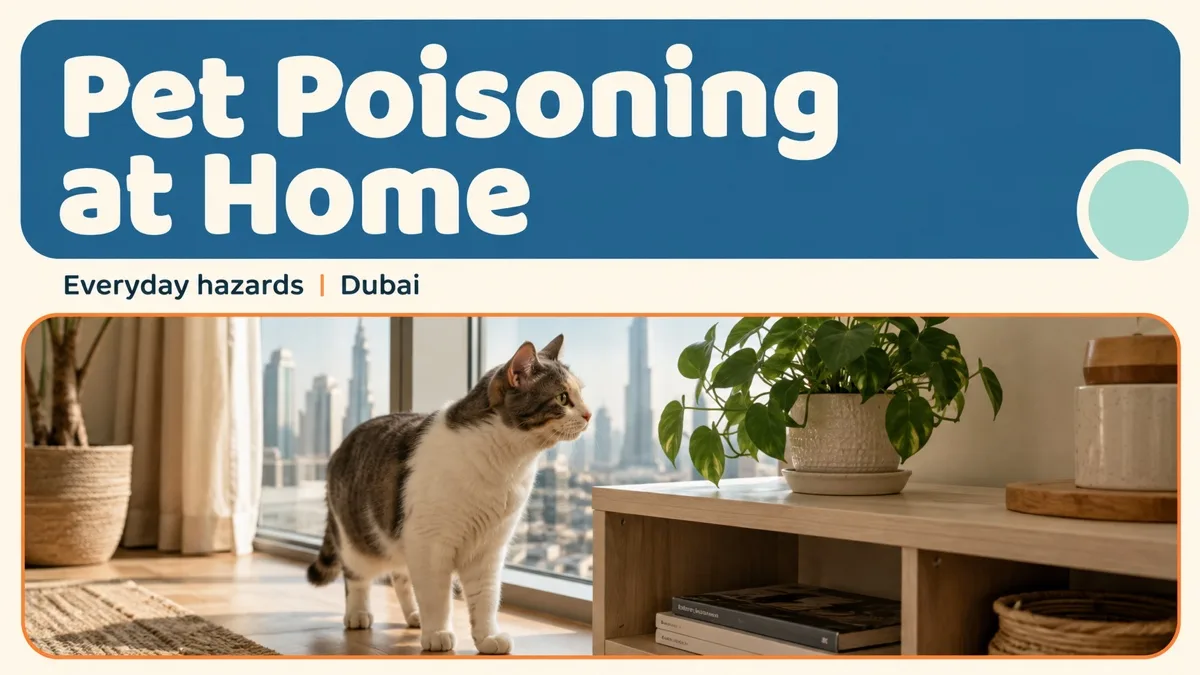
Almost nothing about pet poisoning in Dubai looks like poisoning. There is no malice and usually no obvious moment. There is a plant that came home from a garden centre, a blister pack on a bedside table, a bait station in the bin room, a spill under the sink that somebody meant to wipe up.
What follows is about the hazards that genuinely turn up in flats and villas here, and about the first hour — which is the part owners get wrong far more often than they get the hazard wrong.
There is no observation window with this one
An upset stomach can reasonably be watched at home for a day. A suspected poisoning cannot, and that is the single most important difference to hold on to. The decision is made on suspicion, not on symptoms.
By the time a poisoned animal looks poisoned, the substance has usually been absorbed, and the options that were available in the first hour are gone. Many of the things pets swallow here produce nothing visible for hours — some for a day or more — while damage is already being done to the kidneys or the liver. Waiting to see whether he becomes unwell is, in the cases that matter most, the same as waiting until it is too late to help easily.
So the rule is simple: if you think he ate it, act as though he did. Our line is answered 24/7 and it costs nothing to describe what happened — we will tell you honestly whether this needs to be seen now, whether a same-day appointment covers it, or whether it is genuinely nothing.
We are careful about what that promise means. The line is answered around the clock; the clinic is not open around the clock. If he needs to be seen at an hour when we cannot see him, we say so and direct you to the nearest clinic or hospital that can. Same-day slots and directions are on our Al Quoz booking page.
Do not make him vomit at home
This is the most common well-meant mistake, and it is worth stating plainly. Some substances cause more injury coming back up than they did going down, particularly anything caustic or petroleum-based. An animal who is already drowsy or seizing can inhale what he brings up. And the home methods circulated online are themselves capable of causing serious stomach injury.
Whether emptying the stomach helps at all depends entirely on what was swallowed and how long ago — which is precisely the judgement that needs the substance identified first. Bring him in and let that decision be made by someone who knows what is in him.
The plants sitting in Dubai living rooms
Lilies are the one every cat owner should know by name. They are sold everywhere here as cut flowers and in bouquets, and for cats they are severely toxic to the kidneys — pollen brushed onto the coat and then groomed off is enough of a route. A cat in a household with lilies in a vase is a cat we would want to see, not monitor.
Sago palm, widely used in landscaping and sold as an indoor ornamental, is dangerous in every part including the seeds. Oleander, which lines a great many roads and community gardens in the Emirates, is toxic to both dogs and cats. Dieffenbachia, pothos and philodendron — the standard low-maintenance apartment plants sold in every nursery in the city — cause painful mouth and throat irritation and are among the most common calls we get about chewing.
The practical move is not to remove every plant. It is to know the names of what you own, and to put anything on that list where a cat physically cannot reach it, which in a flat usually means a different room rather than a higher shelf.
The hazards that are not inside your flat
Rodent bait is the one to take most seriously. Buildings and compounds run pest control in bin rooms, car parks, service corridors and landscaped areas, and the bait is designed to be palatable. A dog does not need to find the station itself — a poisoned rodent is a route too. If your building has had pest control recently, walk him on a short lead in those areas and check what he picks up.
Cockroach and ant gels applied along skirting boards are within easy reach of both species. And in underground car parks, radiator coolant collects in puddles that are sweet-tasting and attractive to animals; it is one of the more dangerous things a free-roaming or escaped cat can drink, and it does not need much.
This is the part of the picture that surprises people who keep an immaculate flat. The exposure often happens in the short walk between the front door and the car.
The kitchen, the medicine cabinet, and the half-hour that removes most of it
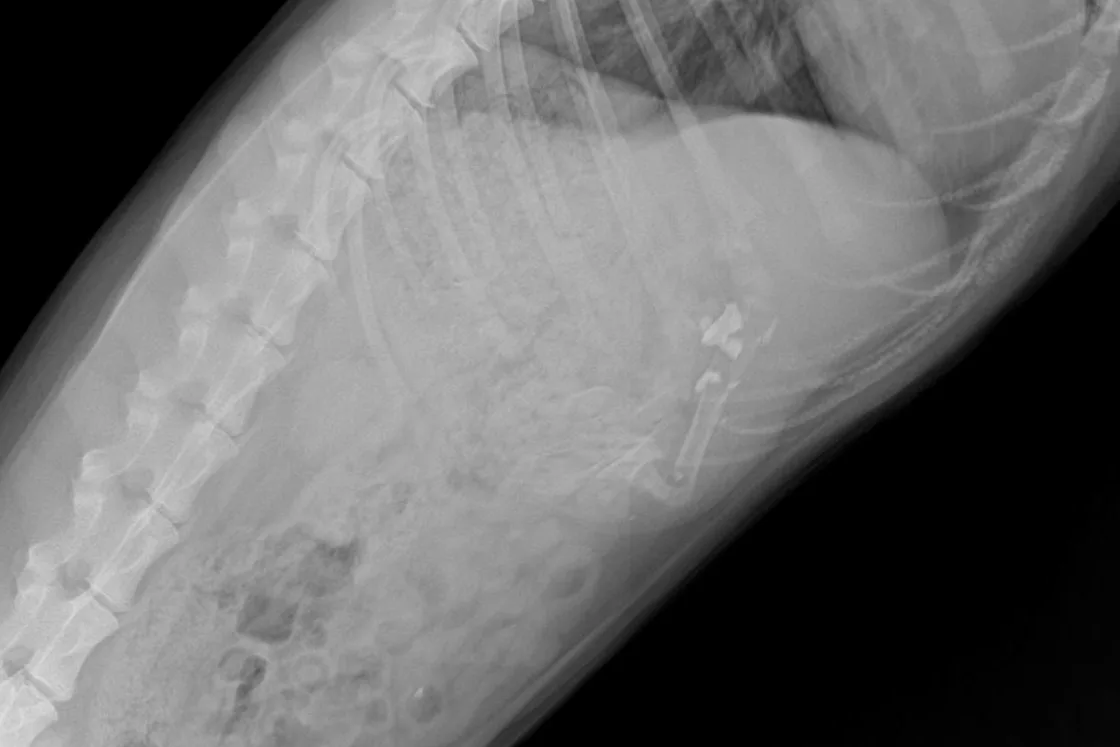
Human painkillers are the leading household medicine problem — paracetamol and ibuprofen among them, both of which are dangerous to dogs and cats at quantities far smaller than owners assume, and cats are especially vulnerable. Handbags left on the floor are a recurring theme, as are the tablets that get dropped and not found.
In the kitchen the list is chocolate, grapes and raisins, onion and garlic in quantity, and the sugar-free sweetener xylitol, which appears in sugar-free gum, some peanut butters and some baked goods. Xylitol is the one most owners have never heard of and it acts quickly in dogs.
Cleaning products, drain and oven chemicals, and pool chemicals stored in villa utility rooms round out the list. Anything caustic is also the category where making him vomit does the most harm.
The half-hour that removes most of this is dull and entirely unglamorous. Walk each room and look at it from the floor. Name your plants. Move handbags and medication off low surfaces. Find out when your building does pest control and where. It takes one evening, and it removes a great deal of what we see.
What to bring, and what happens once he is here
Whatever it came in should come with him — the box, the blister strip, the bottle, the bait sachet, or a torn-off piece of the plant if you cannot name it. What was swallowed, how much at most, and how long ago are the three facts the plan is built on, and an honest maximum is far more useful than a reassuring guess. Ring on the way rather than on arrival if there is somebody else in the car to do it.
He is assessed immediately, and treatment starts on what is known rather than waiting for confirmation. Blood work tells us whether the kidneys and liver are being affected and gives a baseline to measure against over the following days, which is often the difference between catching organ damage and discovering it. That is run in-house — the detail is on our emergency diagnostics page.
Most poisoning cases are treated by supporting the animal properly while the substance clears, which frequently means staying with us on fluids rather than going home the same hour. How that service is arranged is set out on our emergency service page.
What it costs
The consultation is AED 120, and that is a published price rather than an estimate. Everything after it depends on the substance and on how he is when he arrives, so we quote it once we have seen him and start nothing you have not agreed to — message us on WhatsApp for a same-day quote.