
Dog Diarrhoea: What You Can Manage at Home and What You Can’t
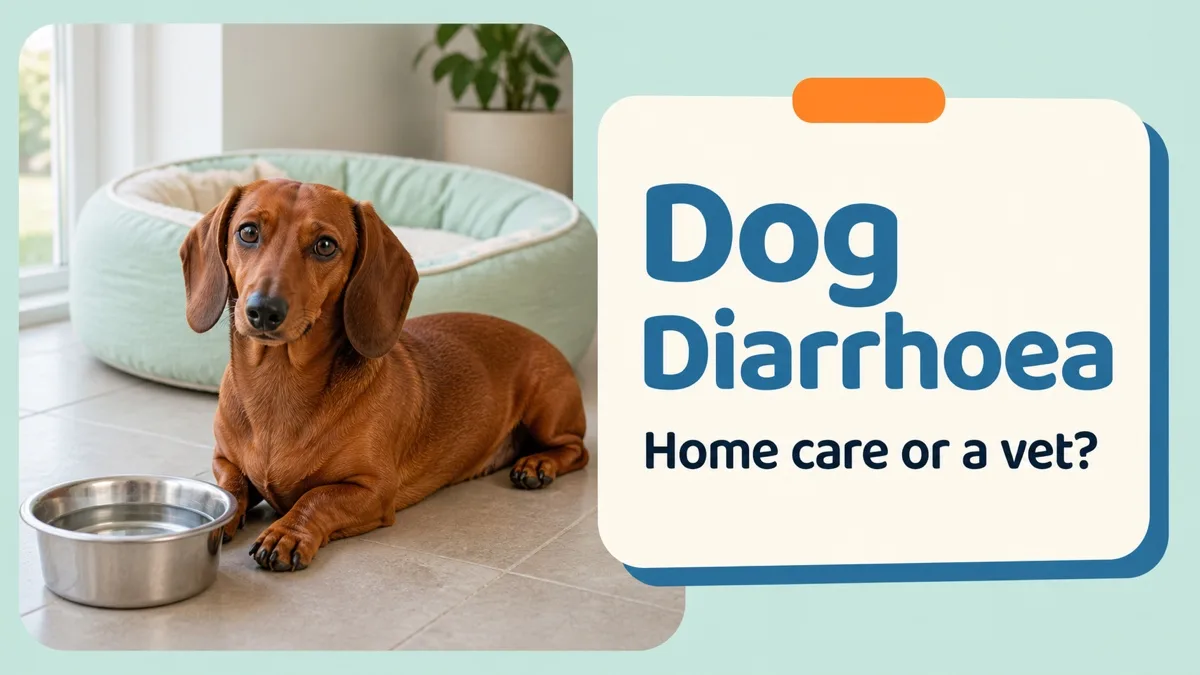
Most cases of dog diarrhoea resolve without a veterinarian. A dog eats something on a walk, his gut objects for a day, and by the following evening things are normal again. Treating every loose stool as an emergency would be exhausting and wrong.
The useful question is narrower than that, and it is the one this page answers: which cases are not like that. This page deliberately names no products and no doses — what to give, if anything is given at all, belongs to the veterinarian who has examined your dog and knows what is causing it.
The Dubai variable is a parasite cycle with no off-season
Worms and single-celled gut parasites are a routine finding in loose stool cases here, in indoor dogs as much as outdoor ones. There is no cold season in this country to interrupt the cycle the way a European winter does, so exposure runs all year rather than in bursts — and a treatment given last spring is not doing anything for him now.
That is why our threshold for looking at a stool sample is lower than the advice you will read on overseas websites. In a temperate country a single loose day in an adult dog is usually just a loose day. Here it is also the most likely moment to find something that has been quietly present for months and would otherwise never have been looked for.
Dogs who scavenge, dogs who visit beaches and dog parks, and dogs sharing a home with cats who go outside all sit at the higher end of that risk. Keeping the schedule current is among the cheapest preventive medicine available, and what it involves is on our deworming page.
What home management honestly consists of
Water stays available throughout and is never withheld. If he is otherwise bright, a short period of gut rest is reasonable, followed by plain, easily digested food in small amounts rather than his usual meal at his usual size. Give him somewhere cool to lie down, and watch him properly rather than glancing at him on the way past.
It does not include anything from your own cupboard. The medicines people reach for in this situation were formulated for a human gut and a human liver, and in a dog they are one of the few reliable ways to turn a problem that was going to settle by itself into one that will not. If you think he needs something, that is the moment to call rather than the moment to improvise.
Give it about a day. If he is bright, drinking, eating a little, and the stool is improving rather than worsening, this is going the way it should.
The signs that end home management
Blood ends it, whether it is fresh and red or dark and tarry. So does diarrhoea with repeated vomiting alongside it, because the vomiting removes the drinking route that was compensating for the fluid he is losing. A dog who is flat, uninterested or unwilling to stand needs to be seen rather than watched, and so does one whose abdomen is painful, tense or bloated. And diarrhoea that is still going after a day or two, rather than settling, has stopped being self-limiting by definition.
Add to that anything you already know: he raided a bin, he was fed by a neighbour, he ate something on the beach, he has been abroad recently, he is on long-term medication, or he is old. Context changes the reading, and it is why we ask what looks like a lot of questions on the phone.
And if you have any reason to think he swallowed something toxic rather than merely something unwise — a discarded vape or battery, something he lifted off the floor of a service corridor, a tablet dropped at home and never found — then diarrhoea is the least of it and this page no longer describes your situation. Stop reading and go; the route in is on our emergency care page.
Puppies do not get the observation day
A puppy with diarrhoea is a different category and we treat him that way. He has very little fluid reserve, he dehydrates quickly, and diarrhoea in an unvaccinated or partly vaccinated puppy raises the possibility of infectious disease that will not wait for a wait-and-see approach.
This matters more here than in most places because of how puppies arrive in the UAE. Many come from private sales, informal breeders and rehoming arrangements, with vaccination cards that are incomplete, unreadable, or claiming more than was actually given. If you cannot state with confidence which vaccinations your puppy has genuinely had and when, treat him as unprotected until we have read the record with you.
What we do at the appointment
We examine him, assess how dehydrated he actually is rather than how dehydrated he looks, and feel the abdomen for pain or a foreign body. Then, in most cases, we look at a stool sample — parasites, bacterial overgrowth and inflammatory patterns are found there rather than guessed at, and it is the test that most often changes the plan. That is covered on our faecal testing page.
Bring a sample with you if you can, in a sealed bag or container, from the most recent stool rather than yesterday’s. It saves a visit surprisingly often.
What it costs
The consultation is AED 120. Laboratory work is quoted once we have examined him, because what is worth running depends on his age, how long this has gone on and what the examination finds — message us on WhatsApp for a same-day quote.
Write down what you saw
Note when it started and how many times it has happened, whether it is watery or merely soft, whether there is blood or mucus in it, whether he is still eating, and whether he has vomited alongside it. Photographs of the stool are more useful than a description and nobody at the clinic will find it strange. Owners routinely underestimate how much these details narrow the search.