
Your Pet’s Vaccination Record in the UAE: What to Keep and Why
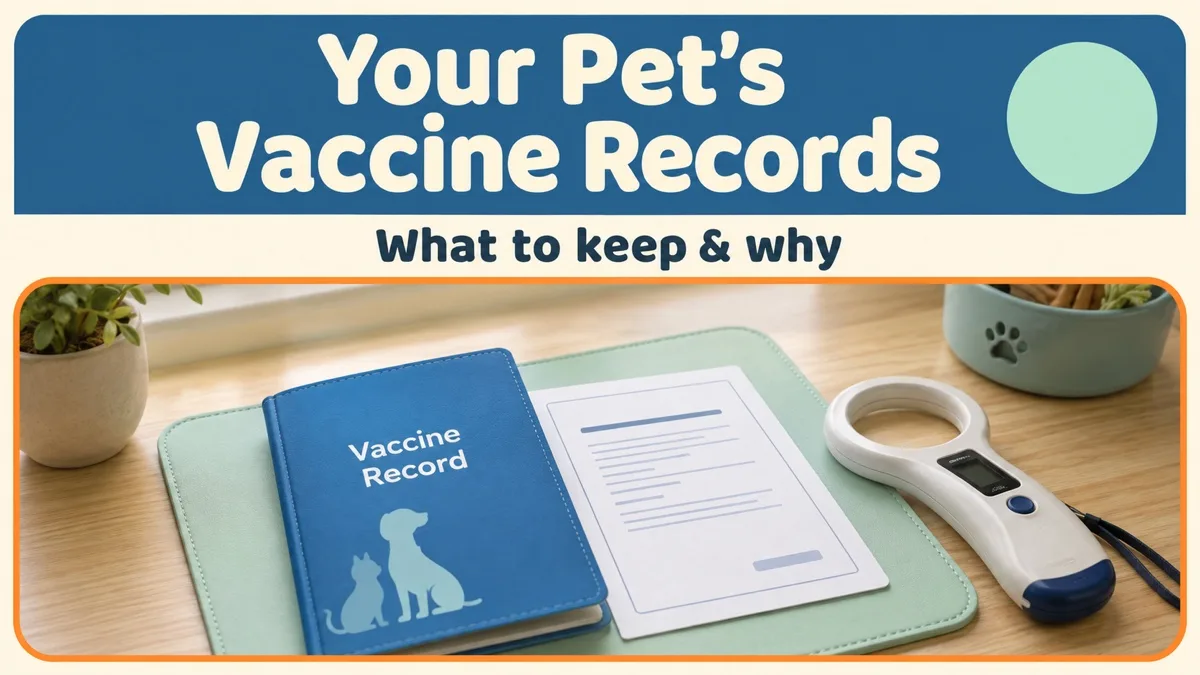
Nobody hands you a folder when you take on an animal in the UAE. You get a card — sometimes only a photograph of a card — and an unspoken assumption that you will still have it in four years’ time. A pet vaccination record in the UAE gets asked for far more often than most owners expect, and almost always at a moment when there is no time left to reconstruct it.
What follows is what the record has to show, who will ask to see it, and what can be done when it has already gone. It deliberately does not tell you which vaccines your animal is due — that depends on his age, his history and where he has been, and it belongs to the veterinarian who has examined him.
What a usable record actually shows
A pet vaccination record UAE authorities will accept is not a list of dates. It has to identify the animal, describe each dose, and be traceable back to a clinic somebody can contact. Identification is where most cards fail — a name and a species describe an animal, not your animal, and the thing that ties the paper to the pet standing at the desk is the microchip number.
For each dose it should show what was given, on what date, and when the next one falls due. The rabies certificate is usually a separate document with its own reference, and it is the one to guard hardest, because the administrative processes here rest on it rather than on the card. A clinic stamp and a signature are what turn the whole thing from a note into a document.
Several things owners assume will count do not. A pharmacy receipt is not a record. A message from a breeder saying the litter was “done at six weeks” is not a record. Neither is a vaccine sticker stuck into a notebook with no date and no clinic name beside it. If a stranger cannot read it and act on it, it will not be treated as evidence of anything.
The card in your drawer is a copy, not the original
The clinical file sits with the practice that treated him. The card is your extract of it — a useful distinction on the day the card is lost, because the history may still exist somewhere even when your copy does not.
It also explains the most common way a record fragments. Owners move flats, change clinics, and start afresh with a new card at each one. Three years later there are two partial histories in two buildings and no single document covering the animal’s life. Whichever clinic you settle with, ask them to enter what came before into the file, so that one place holds the whole picture rather than the most recent third of it.
The cheapest protection available to anyone is a photograph of both sides of the card after every visit, stored where photographs are backed up automatically. We have rebuilt a great many records from an owner’s phone.

Registration is where a gap shows up first
Rabies vaccination is a legal requirement for owned animals here, and the certificate is what municipality registration rests on. If it has lapsed, registration does not proceed — not because anyone is being obstructive, but because there is nothing left to register against.
Registration is handled by the authority of the emirate you live in, so a move between emirates means presenting the record again rather than updating an address on a file that travels with you — another reason it has to survive being handed to a stranger. What is required, and in what order, is on our registration page.
Boarding checks at the door, on the morning of the flight
The check that decides it happens at drop-off rather than at booking, which in practice means early on a travel morning with the suitcases already in the car. We ask to see current vaccination before an animal goes into the ward, and so will anywhere else you would want to leave him.
Nothing can be fixed in that hour. A dose given on the day is not protection on the day, and no responsible facility will pretend otherwise — which is why the record deserves a look when you book the trip rather than when you leave for it. What a check-in asks for is set out in our boarding requirements.
What quietly breaks a record
Expiry is the obvious failure, and a certificate that lapsed last week is as expired as one that lapsed last year. The rest are administrative. A rehomed animal arrives under a new name while the card still carries the old one. A card written in one language is handed to a desk that works in another. Dates are entered by hand in a format that can be read two ways, and nobody can tell whether a dose fell in March or in the third of a month.
Practice apps and portals help, but they are not a substitute. An app belongs to the clinic that runs it, and access to it can end when your relationship with that clinic does. Treat anything digital as a convenience layered over a document you also hold yourself.
None of this means the animal is unvaccinated. It means the vaccination cannot be proved, which for every purpose above amounts to the same thing.
Rebuilding one that has gone
Start with whoever already holds a piece of it. A previous clinic can usually reissue from its own file, a breeder or a shelter may still have the litter’s dates, and the microchip registration ties a number to an animal even when the paper has gone. Two incomplete sources that agree with each other are worth more than one confident memory.
Then tell whoever is reconstructing it what actually happened, including the parts that sound careless. A date written down as fact when it was really a guess produces a document that looks complete and falls apart in front of the first person who checks it — and this is the document you will be handing to a stranger who has no reason to give you the benefit of the doubt. What can be built on and what has to be done again is a decision made with the animal present and the paperwork open, not over the phone.
What it costs
Reading a record against the animal happens inside a consultation, which is AED 120. Where one dose is genuinely missing, a single viral vaccine is AED 80; where there is nothing left to build on, the vaccination package is AED 199 and includes deworming. Those are published prices rather than estimates, and what each one covers is on our vaccination service page.