
Pet Rules in Dubai Apartment Buildings: What to Check Before You Sign
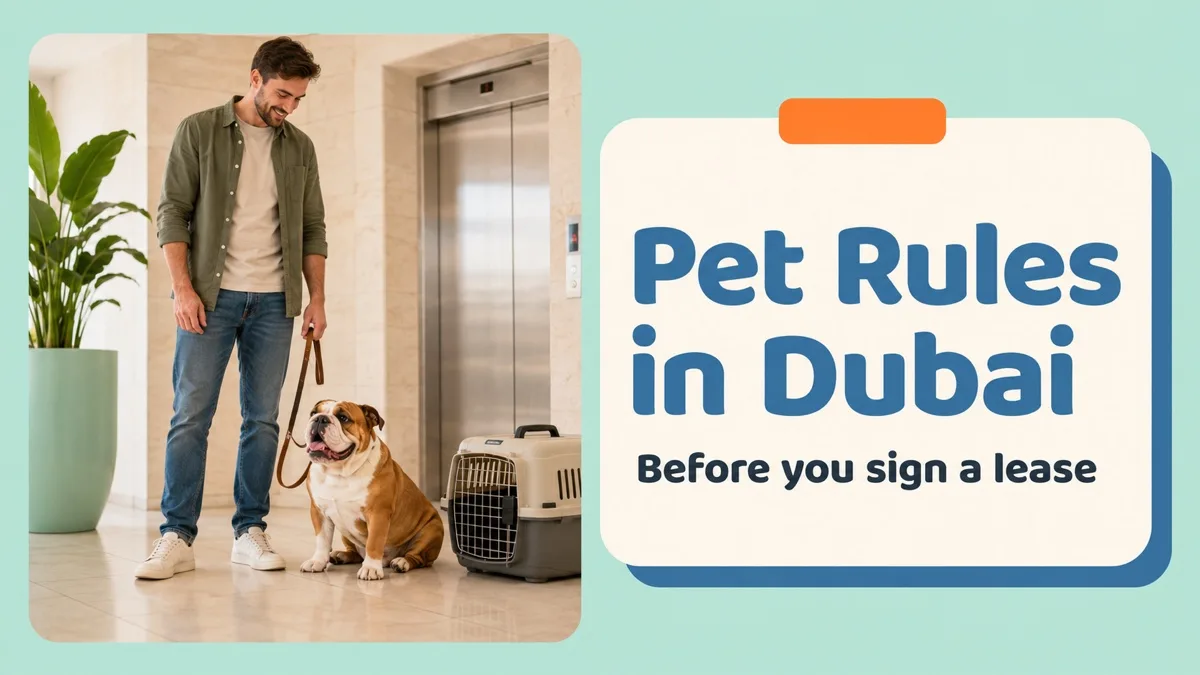
Owners usually meet the pet rules in Dubai that govern their own building in the worst order: the animal arrives first, and the building’s position on him is established afterwards, often by a notice under the door. Almost none of it is negotiable at that point.
This is not legal advice and it is not a reading of your contract. It is what we see repeatedly from the other side of the consulting table — the questions worth asking before a lease is signed, the rules that turn out to be enforced in practice, and the one apartment hazard that appears in no tenancy agreement anywhere and puts animals in front of us every year.
There are three separate rulebooks, and the strictest one wins
The first is set at the emirate level and covers ownership itself — identification, vaccination, registration, and which animals may be kept at all. The second belongs to the building: an owners’ association or a management company, with a written policy that applies to every unit. The third is your own tenancy contract, which can be stricter than the building policy and frequently is.
They are independent of each other, and satisfying one does not satisfy the others. A cat can be fully registered and correctly vaccinated, and still not be permitted in a particular tower. The authority’s requirements and your landlord’s are two different conversations.
Silence in a contract is not permission
If the lease says nothing about animals, owners tend to read that as approval by default. In practice it means the question is unresolved, and it will be resolved later by whoever has the stronger position at the time — usually not you.
Ask for the building’s written pet policy as a document rather than an assurance, and get the answer to your specific case in writing. A verbal yes from a leasing agent who moves to another agency in March is worth exactly what it costs.
Ask about the limits, not just the permission
Buildings that allow animals usually allow them conditionally, and the conditions are where the trouble sits. There is often a limit on numbers, sometimes on species, and frequently on size or weight for dogs. There may be a deposit. There may be a restriction on which entrance and which lift you use.
Ask, too, whether the policy can change at renewal. Some communities have tightened their rules after a change of management, and a tenant who moved in under one policy can find himself renewing under another. If you have not chosen an animal yet, doing these checks before the adoption rather than after it is the whole point, and the sequence is on our adoption guide.
What gets enforced is almost always about the common parts
Nobody inspects your flat. The complaints that reach a management office are about the lobby, the lift, the corridor and the car park — a dog off a lead in a shared space, a cat carried loose through a lobby, waste not picked up on a compound lawn, or noise carrying through a wall at night.
This is why a carrier and a lead are not fussiness. They are the difference between a neighbour who saw a controlled animal and a neighbour who saw a loose one, and that impression is what a complaint is built from weeks later.
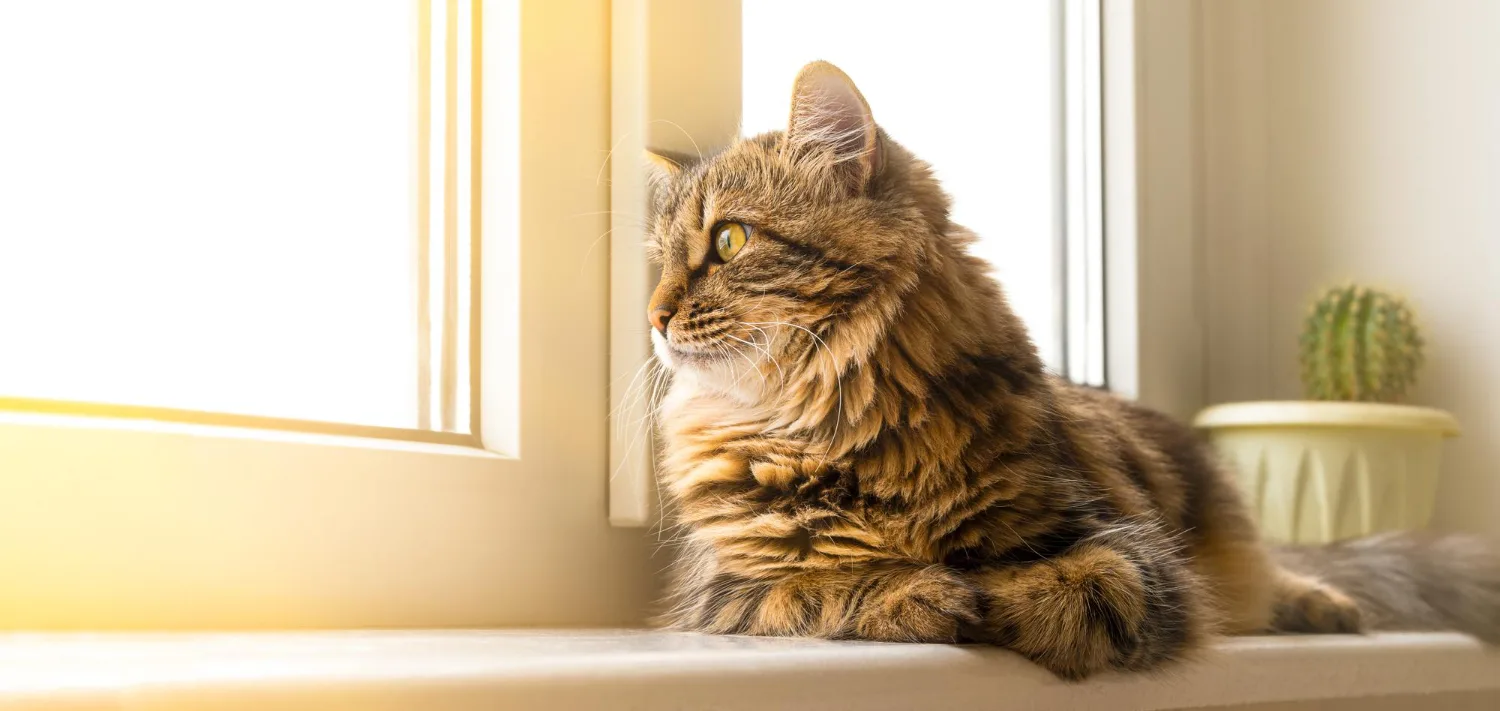
The hazard that is in no contract: balconies and open windows
Cats fall from balconies and windows in this city routinely, and it is one of the more preventable emergencies we see. The pattern is consistent — a cooler evening, a window opened for the first time in months, an insect or a bird outside, and a cat who has spent his life believing every surface is solid.
Height is not protective, and a fall from four floors is not meaningfully safer than one from fourteen. Mesh or screening on any balcony and any window that opens is the whole solution, it costs very little, and it is the single most useful thing a new tenant in a tower can do in the first week. Landlords rarely object to screening because it does no damage, but ask before you fit it.
Complaints escalate faster than owners expect
The escalation path is short: a neighbour speaks to security, security passes it to the management office, and the office writes to the landlord. By the time you hear about it, the account of events has been through three people and none of them was you.
What helps is being demonstrably the responsible sort of owner before you need to be — an animal with a current record, a vaccination history that is up to date, and a vet who knows him. A management office asking to see papers is not the authority and cannot register your animal for you, but the documents the two of them want begin in the same place, which is the veterinary paperwork for registration.
Moving flats is when all of this bites
The pet-friendly portion of the rental market is a subset, and it is a narrower and more expensive subset than the whole. That is manageable when you are planning a move and painful when you are not — a lease not renewed, a building under new management, a job change with a fixed date.
The pattern is not uniform across the city, either. An older building around Deira may be governed by a landlord’s own judgement, while a new tower has a written policy, a management office and a form. If you are in that first category and want a clinic within reach, the practical detail is on our Deira page.
What it costs
When a building or a landlord asks for proof, what they are usually asking for is a current vaccination record. At Petbook the consultation is AED 120 and the vaccination package, which includes deworming, is AED 199, and you leave with the record written up rather than promised. Those are published prices rather than estimates.
What a building will not accept is a verbal account of a vaccination, and neither will a boarding facility on the morning you need one at short notice. A record that exists on paper before anybody asks for it is worth more than the same information remembered accurately.