
Cat Dental Disease: The Silent Problem in Dubai Apartments
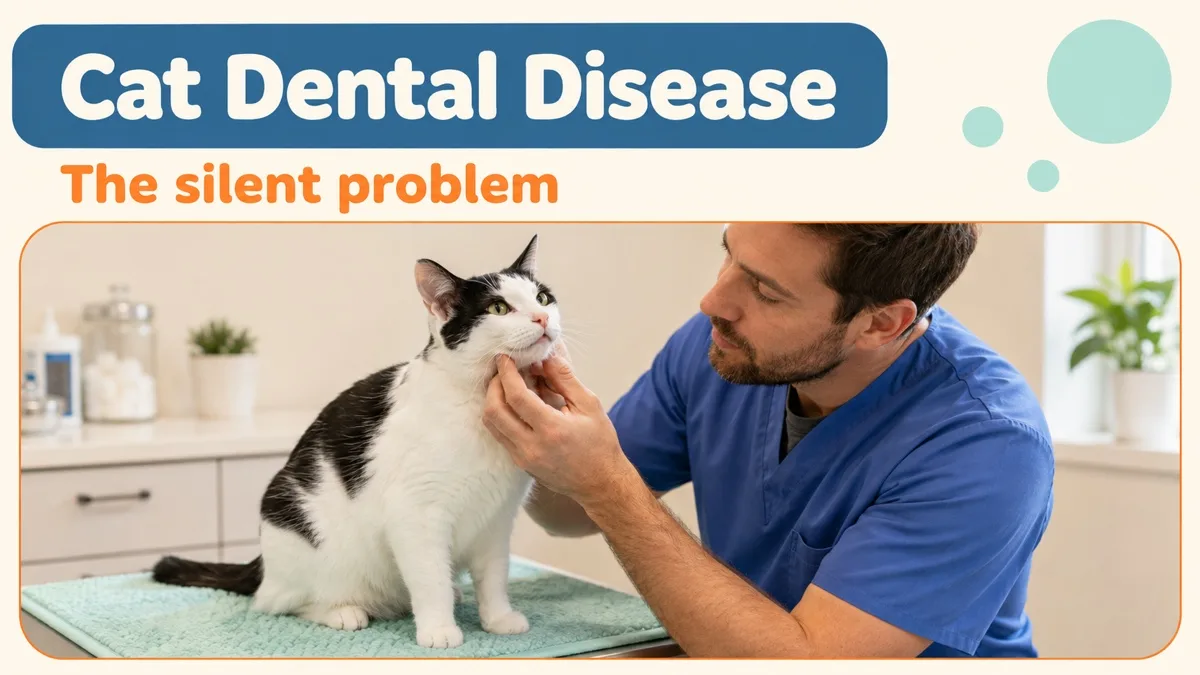
The most common thing an owner says when we show them a cat’s mouth is that she had been eating normally. She usually had been. Cat dental disease is found late almost every time, and the reason is not neglect — it is that cats are exceptionally good at continuing to look fine.
What follows is about the signals that arrive before the obvious ones, and why an indoor cat in a Dubai apartment tends to be missed for longer than a cat anywhere else. It does not list treatments or medicines; that is a conversation for after an examination, with the mouth in front of us.
A cat’s job is to look well
Hiding weakness is not stoicism, it is survival wiring, and it does not switch off because she lives on a sofa. A cat with a painful mouth will keep eating, keep greeting you, and keep sitting where she always sits. She adapts around the pain quietly and continuously, and the adaptation is the only thing you can see.
This is the practical difference between cats and dogs here. A dog with dental disease usually announces it through smell first. A cat may have very little odour and a mouth that needs several extractions — so waiting for bad breath as the trigger to book is, in a cat, waiting for the wrong signal.
The changes that come before she stops eating
She may start choosing the soft food she previously ignored, or eat the gravy and leave the chunks. She may swallow biscuits whole instead of crunching them. She may approach the bowl, look at it, and walk away — hunger and pain arguing, which owners often read as fussiness.
Away from the bowl the signs are quieter still. Grooming drops off, so the coat looks unkempt or greasy along the back where she can no longer reach comfortably. She stops washing her face. She may flinch or turn her head when stroked near the cheek, or chew on one side and leave a small amount of saliva on a favourite blanket.
Any one of these on its own means little. Two or three together, in a cat over four, is a mouth worth looking at properly — and it is a far earlier trigger than a cat who has genuinely stopped eating, by which point we are usually dealing with several teeth rather than one.
The condition owners have never heard of
Alongside the gum disease that dogs get, cats have a problem largely their own: the structure of a tooth can begin to break down from within, at or below the gumline, and the tooth is destroyed gradually by the cat’s own body. It is common, it is genuinely painful, and it is not caused by plaque — so no amount of diet, brushing or dental treats prevents it.
It also frequently cannot be seen. The crown may look ordinary while the root is disintegrating, and the only reliable way to identify it is a radiograph of the mouth under anaesthesia. It is also why a cat’s dental plan is written in two stages rather than one — and the full explanation of how a dental appointment is planned and priced is on our dental service page.
Why the Dubai apartment cat is found latest
Consider the amount of observation an indoor cat actually receives here. Her owner works long hours, she is alone for most of the day, and the interaction happens in the evening with the lights low. Nobody watches a full meal from beginning to end. In a villa household with children, someone usually notices the head-tilt at the bowl; in a one-bedroom flat with a single occupant, often nobody does.
Then there is the food. Dry food is the default here — convenient in the heat, easy to leave down, and it makes a swallowed-whole meal look identical to a chewed one from across the room. And a cat who is being fed automatically, which is increasingly common in a city where residents travel often, is not observed eating at all.
None of this is a criticism of how people live. It is an argument for a deliberate annual check of the mouth, because the passive route — waiting to notice — works considerably less well in an apartment than the literature assumes.
What an awake examination can settle
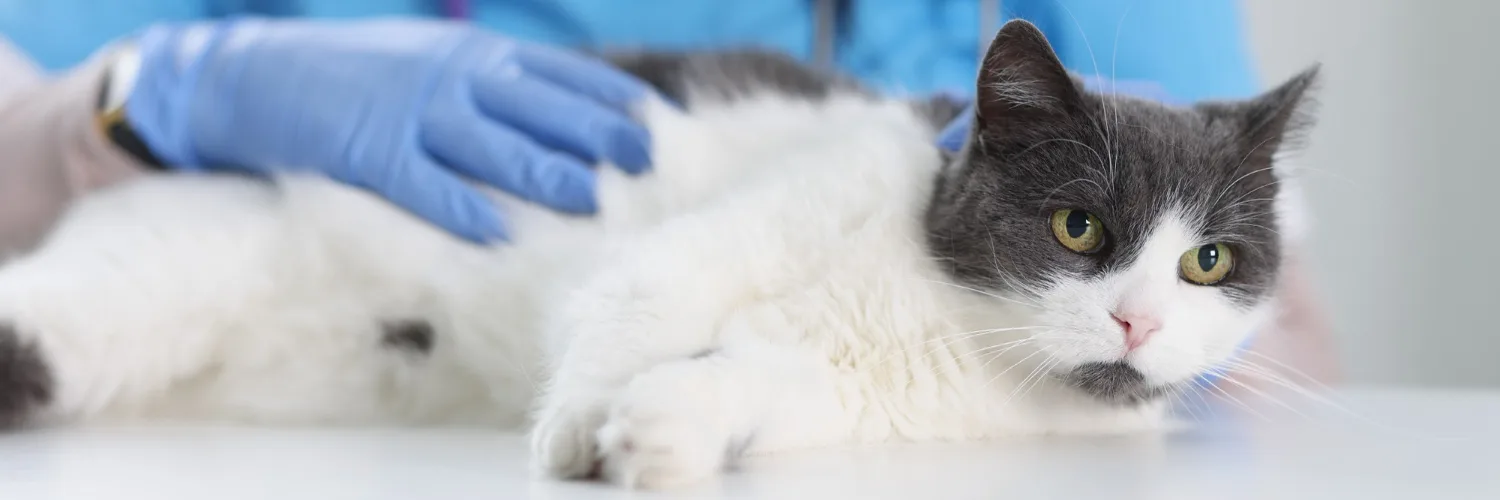
An awake look is worth doing and its limits are worth stating. In a few minutes we can see tartar, inflamed gum and an obviously fractured or missing tooth, and we can often locate the sore side by watching her react to a hand near the jaw — enough to tell you whether the mouth needs attention. What no cat allows awake is a probe along the gumline, and in cats that is exactly where the disease that matters is sitting.
What it costs
A cat dental at Petbook is AED 349, carried out under monitored anaesthesia with pre-anaesthetic blood work run in our own laboratory rather than charged as an extra. The consultation beforehand is AED 120. Both are published figures rather than case-by-case quotes. The exception is extraction and gum treatment, which nobody can price until the mouth has been imaged. What the day itself involves, from admission to going home, is on our cat dental cleaning page.
What changes afterwards, and what surprises people
The consistent report from owners in the weeks after a dental is that the cat became more sociable, more playful, or simply louder — in cats who were never described as withdrawn in the first place. That is the real measure of how well the disease had been hidden, and it is also why “she is old, she is just slowing down” deserves a look in the mouth before it is accepted.
Prevention afterwards is honest but modest: brushing helps against plaque, changes nothing about the resorptive problem, and most adult cats will not accept it. The realistic plan is a check of the mouth at every visit and an annual examination that treats her teeth as seriously as her kidneys, which is how we run a routine appointment on our cat vet page.