
Cat Hair Loss: When It’s Grooming and When It’s Disease
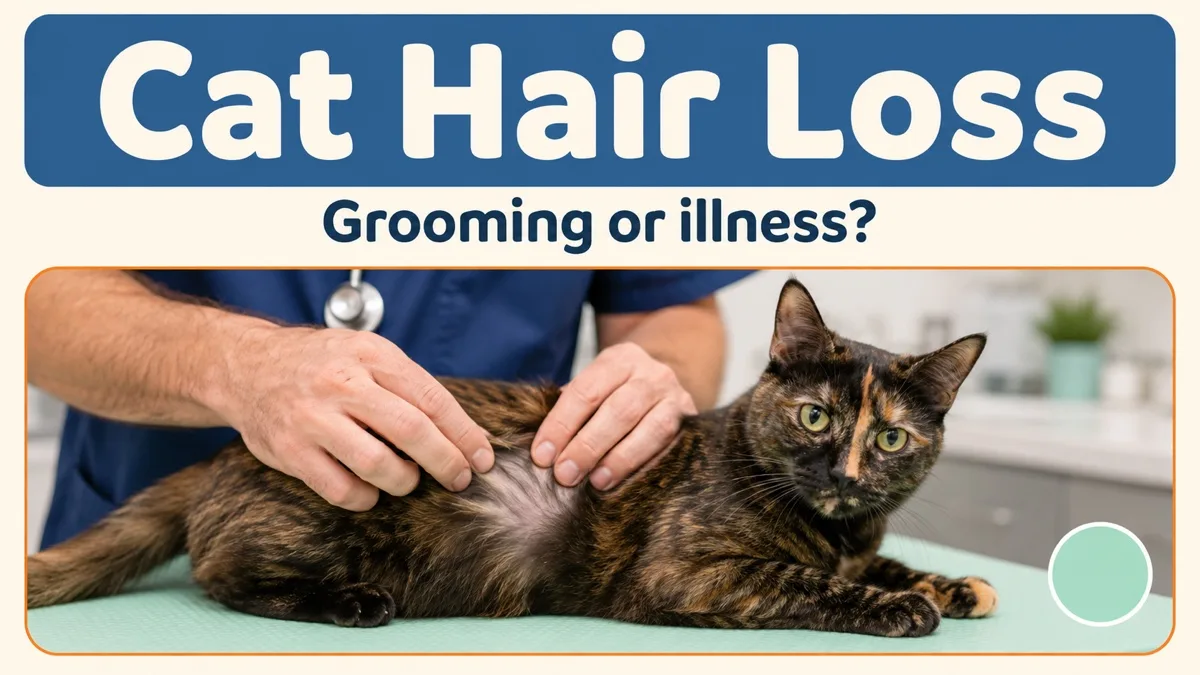
Most owners who come to us about cat hair loss describe hair falling out. In the majority of cases it is not falling out at all — it is being removed, quietly and thoroughly, by the cat herself, usually at three in the morning while nobody is watching.
That distinction decides everything that follows, because a cat who is pulling her coat out has a reason, and the reason is what needs finding. This page is about how to tell the two apart, what the pattern on her body suggests, and which versions need an appointment rather than observation.
Falling out and coming out are different problems
Run a hand against the direction of the coat over a thin patch. If the skin underneath is bare and smooth, the hair has genuinely gone from the follicle, and that points towards a group of causes that includes hormonal and internal disease. If instead you feel short bristle — stubble, like a lawn cut short — the hair has been broken off at skin level, and something has been removing it.
Two other clues support the second reading. Hairballs increase, sometimes markedly, because everything she pulls out is being swallowed. And the litter tray or her favourite blanket collects more hair than the floor does, because the hair is arriving in her mouth first rather than shedding where she walks.
Owners are often relieved to hear their cat is over-grooming, on the assumption that self-inflicted means minor. It usually means the opposite of minor — she is doing it because something itches, hurts or frightens her, and the coat is the symptom rather than the disease.
The pattern says more than the amount
Where the hair goes from is the most useful thing you can bring us. A strip along the lower back and around the base of the tail is the classic parasite distribution, and it is the first thing ruled out in any thinning cat regardless of whether you have seen a flea — in this climate that assumption is never safe.
Symmetrical loss down both flanks, the belly and the inside of the back legs, with the skin underneath looking almost normal, is the over-grooming pattern. It is not always behavioural: bladder discomfort and abdominal or joint pain produce exactly the same picture, because a cat licks over the part of herself that hurts. A middle-aged cat who suddenly develops a bald belly deserves a urine sample before she is labelled anxious.
Round or irregular patches with scaly, crusted skin, often starting on the face, the ears or a front leg, belong to a different category altogether. Fungal skin disease is common in this region, it is the one form of hair loss that has consequences for the household rather than for the cat alone, and it is worth confirming in a laboratory rather than treating on suspicion — what that involves, and how long a course runs, is on our ringworm page.
Whichever pattern you are looking at, photograph it before anything is started. Good light, the same angle each time, and a date on the file. Hair begins to return once the cause is addressed, and a picture taken today is the only way we can see what the patch looked like before treatment changed it.
Stress is a real cause here, and reached too quickly
Over-grooming from stress is genuinely common in this city, and the reason is structural rather than mysterious. Residents move flats often, at short notice, sometimes several times in a few years. Flatmates change, a partner arrives or leaves, families travel for long stretches and the cat goes into boarding, and a building fills or empties around her. A cat’s sense of security is built almost entirely from territory and routine, and both are disrupted here more often than in most places.
The signs cluster in the weeks after a change: a bald belly, a chewed forearm, more hiding, litter tray habits shifting, a cat who stops greeting people at the door. Cats rarely show distress as visible anxiety — they show it in the coat and the tray.
But it is a diagnosis of exclusion, not a first guess. Attributing a bald flank to a house move and stopping there is how a bladder problem or a painful hip goes unexamined for a year, and that is the single most common mistake we see in this group. The behavioural explanation earns its place after the physical ones have been checked, and what a full workup covers is on our cat vet page.
Normal shedding does not look like this
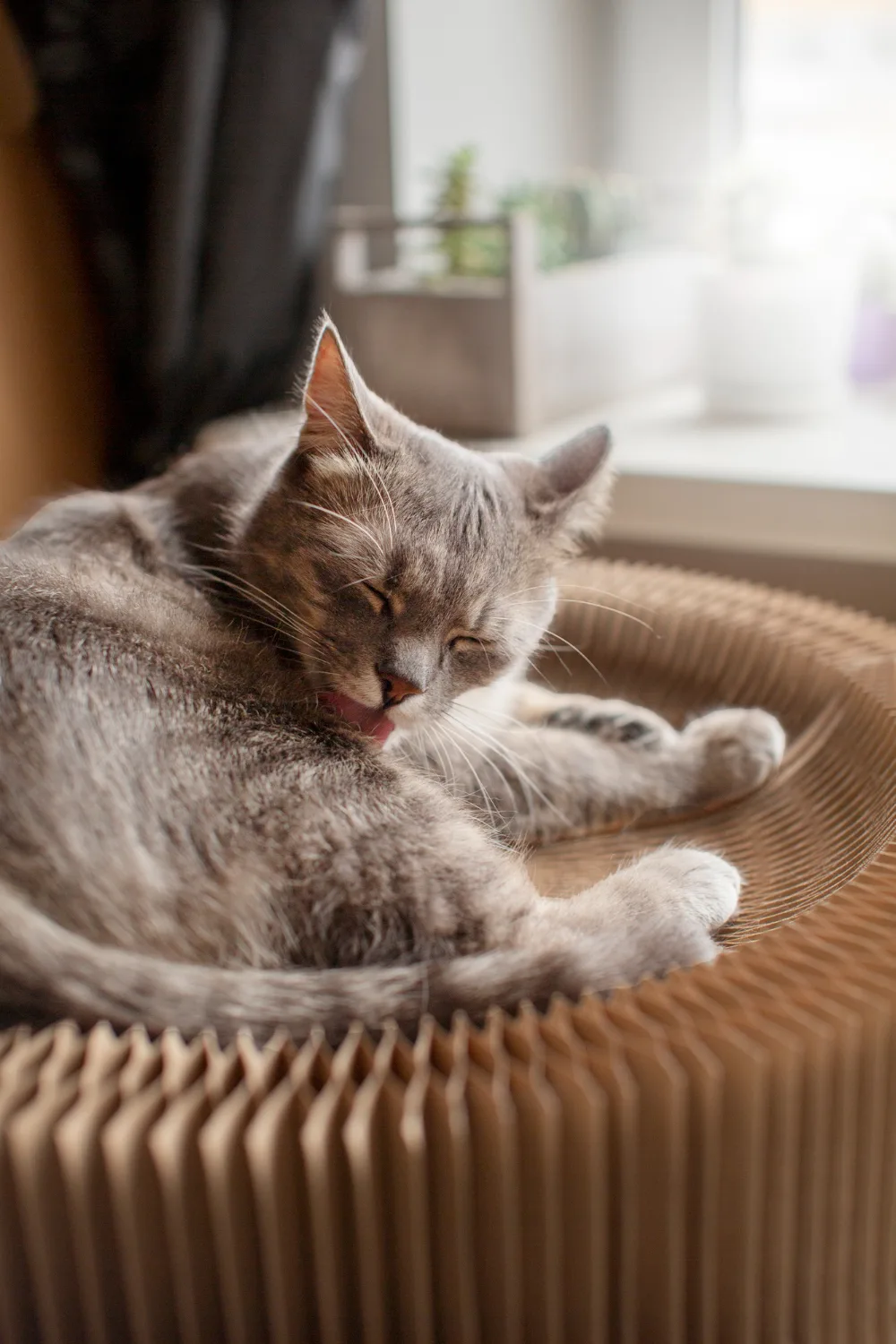
Every cat sheds, and an indoor cat here sheds more or less continuously because constant air conditioning and artificial light remove the seasonal cues that would otherwise concentrate a moult into a few weeks. So a great deal of hair on the sofa all year round is normal for a Dubai cat and is not what this page is about.
The line is straightforward. Shedding thins the coat evenly and never exposes skin. Bald patches, stubble, redness, scabs, a rash of small crusts along the back, or any thinning that has a shape are not shedding, and they do not resolve by being brushed more.
What grooming does and does not fix
Regular brushing removes dead undercoat, which reduces hairballs and matting and makes any new bare patch obvious early. For a long-haired cat here it is genuinely preventive care rather than cosmetic. What it does not do is treat a cat who is pulling her own hair out, and shaving a cat to solve a hair problem removes the evidence without touching the cause.
It also helps to have a groomer who handles cats regularly and knows when to stop and tell you to see a vet instead. A cat with sore, thin, inflamed skin should not be worked on until she has been examined, and how we approach a nervous or uncomfortable cat is on our cat grooming page.
What it costs
At Petbook a consultation is AED 120 and a full cat groom is also AED 120, with a basic session at AED 69 — published prices rather than estimates. Skin and fungal testing, and any course of treatment that follows, depend on what is found, so message us on WhatsApp for a same-day quote once the examination has told us what we are treating.