
Shaving a Double-Coated Dog in Dubai: Here’s Why Not
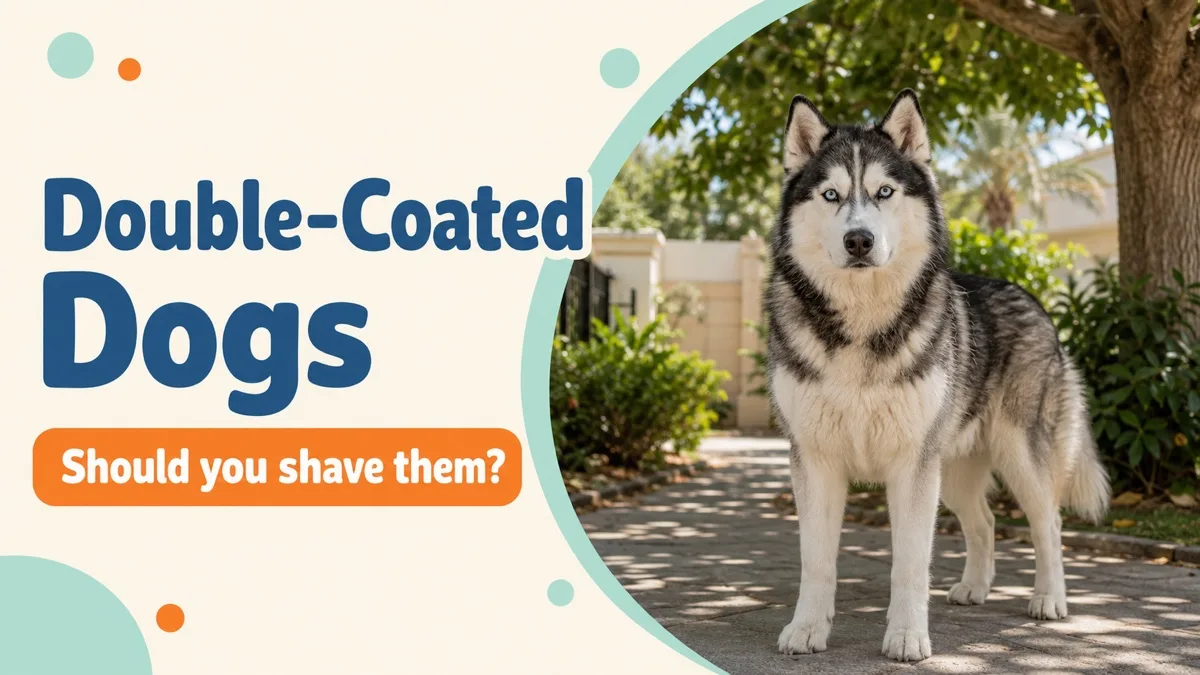
Every May we have the same conversation with owners of huskies, samoyeds, malamutes and German shepherds, and it always begins the same way: he is suffering in this heat, take it all off. The request is affectionate and completely understandable, and shaving a double-coated dog is still the wrong answer.
Dubai has a large population of northern breeds, which is what makes this worth writing down. The reasoning is not sentimental — it is about what those two layers physically do, and what happens to them when they are removed.
The coat is two different materials doing two different jobs
The undercoat is soft, dense and short. It traps a layer of still air against the body, and still air is an insulator in both directions — it slows heat leaving in a Siberian winter and it slows heat arriving in a Dubai car park.
The topcoat is coarse, longer and much more sparse. It sheds water, carries dirt away from the skin, and it is the layer that blocks sunlight before it reaches skin that has never seen any. Neither layer grows back on the same schedule, and neither behaves like the single coat of a labrador or a terrier.
That is the crux of it. A clipper takes both layers off in one pass, and what you have created is not a cooler dog — it is a dog whose skin is now the outer surface of the animal.
Shaving does not lower his temperature
Dogs lose almost no heat through the skin. They cool through panting and through the pads, which is why a shaved dog and a coated dog on the same walk are relying on exactly the same mechanism.
What the shave changes is heat gain rather than heat loss. Sunlight that was landing on the topcoat now lands on skin, and the insulating air layer that was slowing the transfer of ambient heat has been removed. On a July afternoon here that trade is not neutral — it runs against him.
It also removes a warning system. Owners frequently assume that a shaved dog is safe to walk in conditions they would otherwise avoid, and a great many heat emergencies in this city start from exactly that kind of false reassurance. What the emergency itself looks like, and what to do in the first minutes, is on our heat stroke risk page.
Skin that has never been exposed, suddenly exposed
Sunburn is a real outcome, particularly on the back, the bridge of the nose and the flanks, and particularly in pale or thin-coated dogs whose skin was never designed to face the sun directly.
Beyond burning, exposed skin in this climate is also skin that dries out under air conditioning, gets bitten more easily by insects, and reacts more readily to whatever it now makes contact with. A proportion of the itchy dogs we see in the weeks after a summer shave are itchy because of the shave.
The regrowth is the part nobody warns you about
The undercoat grows back faster than the topcoat, and denser. In many dogs the result over the following months is a coat that is woolly, patchy and dull in texture — the guard hairs that used to keep it open and airy are still catching up, so the coat that returns traps more heat and more moisture than the original did.
In older dogs and in some individuals it does not come back properly at all. There is no reliable way to predict which dog that will be, which is the honest reason to treat a clipper as a one-way decision on a double coat rather than a seasonal habit.
What to ask for instead of the clipper
Almost nobody who says “take it all off” is asking for a haircut. The request is about the undercoat — the dead layer packed in under the guard hairs, which the owner cannot see and can only live with.
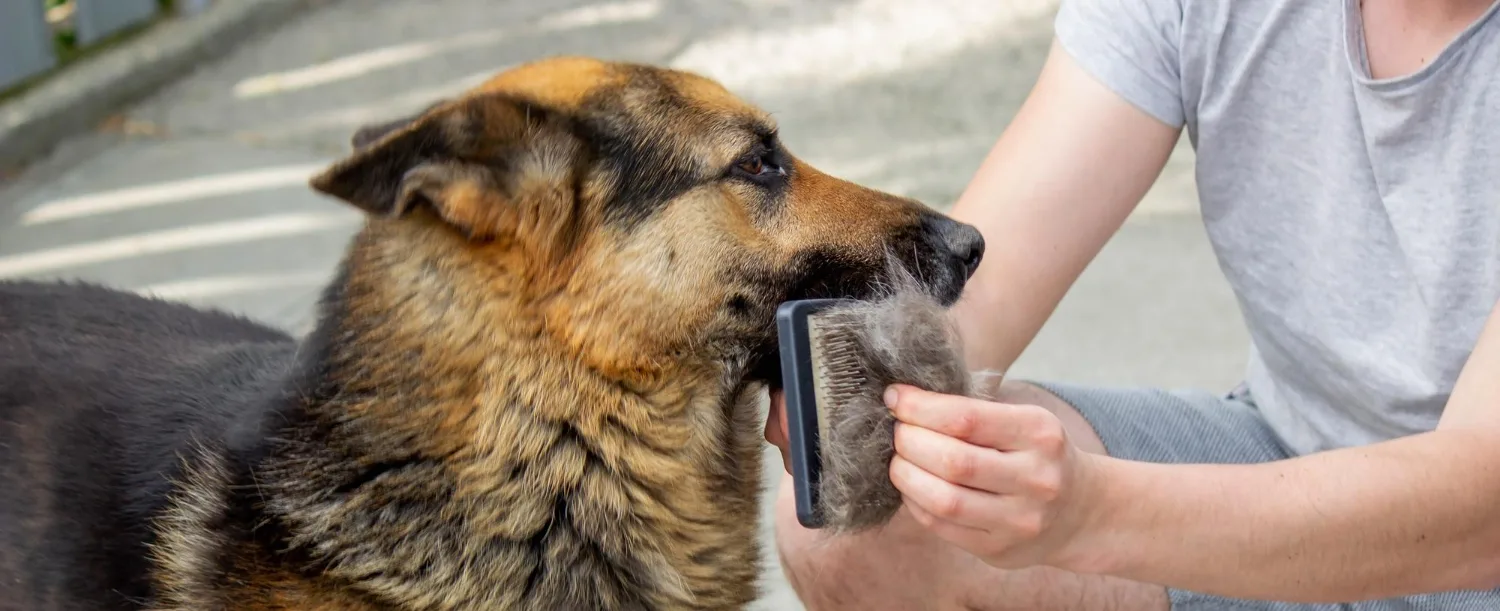
That layer is exactly what a de-shedding groom removes. Pulling it out opens the coat up, lets air move through it again, and takes out most of the loose hair that would otherwise be on your sofa. It also lets somebody actually see the skin, which matters more than it sounds — recurring ear trouble in particular is never solved by shaving the body, and what it does need is set out on our ear infections page.
Between sessions an undercoat rake does the same work in miniature at home; a surface brush lifts flyaway hair and leaves the dead layer sitting exactly where it was. How often the salon session itself needs repeating depends on the coat and the season, and for a northern breed in a Dubai summer it is more often than most owners expect — the intervals we work to are on our dog grooming page.
When we do clip a double coat
There are real exceptions, and pretending otherwise would be dishonest. A coat that has felted solid past the point of safe brushing has to come off — at that stage the mats are doing more harm than the clip will. Surgical sites are clipped. So are areas being treated for a skin condition where the coat is holding moisture against the problem.
Those are medical decisions with a specific reason attached, made for a defined area or a defined episode. They are not the same thing as a routine summer shave, and the difference is that somebody has weighed the cost of the coat against a problem that already exists.
What it costs
Dog grooming starts at AED 145 and is priced by weight band, so a large northern breed in the 21 to 40 kilogram range is AED 200. Those are published prices rather than estimates, a de-shedding session is part of the standard groom rather than an extra line on the bill, and the band-by-band list is on our grooming prices page.