
Cat Matting in Dubai: Why It Happens and What Not to Do
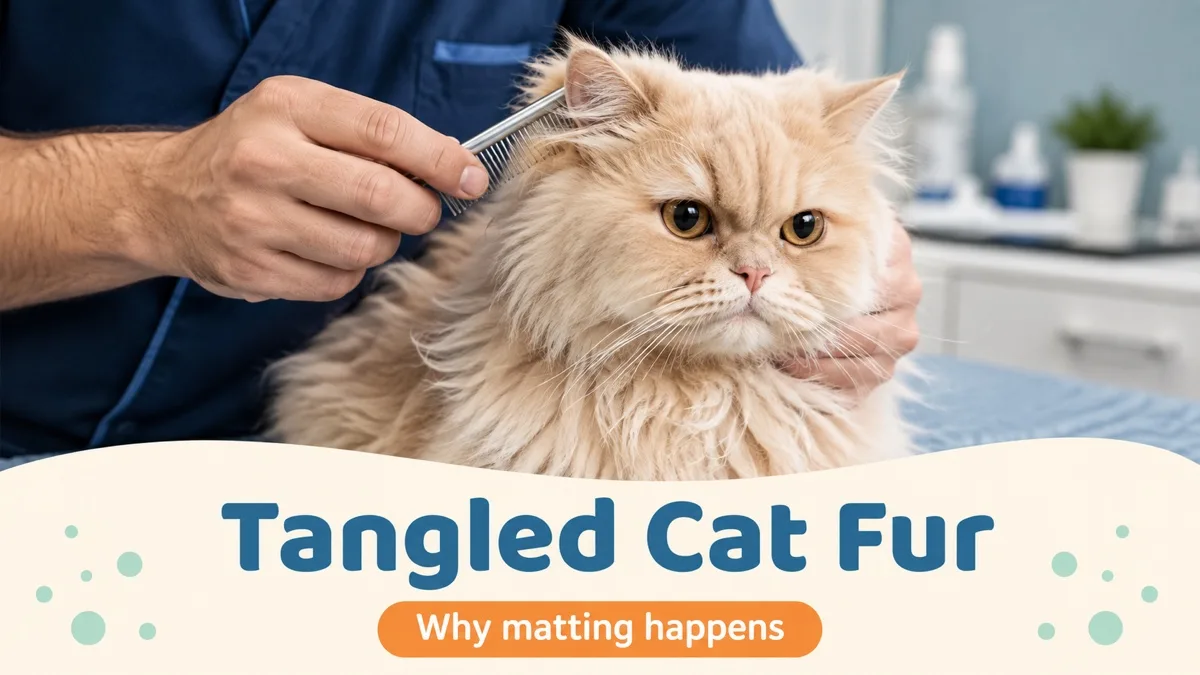
Owners tend to describe cat matting as a knot, which makes it sound like a tangle that can be worked loose with patience and a wide-toothed comb. For the first day or two, that is exactly what it is.
After that it becomes something else, and the difference matters because it changes what you are allowed to do about it. This page is about the mat itself — how it forms in a Dubai flat, and the four things owners reach for that reliably make it worse.
A mat is not a tangle, and the difference is the skin
A tangle sits in the outer coat. A mat is shed undercoat that never left, felted together with live hair and pulled tight against the body — and once it is tight, it is anchored to the skin rather than resting on it.
That anchoring is the whole reason mats matter medically. The skin beneath a mat gets no airflow, stays damp, and is under constant traction every time she moves. Lift a large mat off and the skin under it is often red, thin and sometimes broken, and it has been that way for far longer than the owner realised, because the mat was hiding it.
She will also stop using that part of her body normally. A mat in the armpit or between the back legs pulls with every step, and a cat who has become quiet or is sleeping in one position is sometimes just a cat who is sore.
Why it happens faster here
Conditioned air is dry air, and a dry coat is a rough coat. Hair that has lost moisture stops sliding past its neighbours and starts catching on them, which is the mechanical beginning of every mat. There is always loose hair available to catch, because indoor living removes the shedding season.
Then the weather finishes the job. A coat that holds damp — after a carrier ride, a bath, or simply a humid August week — felts what the dry months only tangled. A knot behind the ear that would stay a knot in a dry climate becomes a solid pad in a fortnight here. Dry air starts it; humidity sets it.
The third factor is the cat herself. Cats in this city are frequently overweight and frequently indoor-only, and an overweight cat cannot reach the base of her spine or the back of her thighs. Those are precisely the areas that mat first, which is why matting so often appears on a cat whose coat was fine for eight years.
The scissors problem
Cutting a mat out with household scissors is the most common cause of grooming-related injury we see in cats, and the reason is anatomy rather than carelessness.
Cat skin is thin, loose and mobile. When you lift a mat, the skin tents up with it, so the blade closes on a fold of skin the owner cannot see under the hair. The wound that follows is usually longer than expected, often deeper than expected, and it happens to careful people who were being gentle. If it has already happened, it needs to be looked at rather than watched — skin wounds in a warm climate become infected quickly, and the ones that were closed over by hair are the ones that get missed.
The other three things that make it worse
Bathing a matted cat is the first. Water swells the hair shaft, and as it dries the fibres contract and the knot draws in on itself — so a coat that went into the bath with a few loose mats comes out as a single felted sheet. Wash after the coat is clear, not before.
Home clippers are the second. They look like the professional version and are not — the blade sits differently, and there is very little room between a tight mat and the skin. The third is detangling spray on a mat that is already solid, which softens the surface and lets you work at it for twenty minutes without ever reaching the base, while the cat learns that being handled means being pulled.
And there is a fourth, quieter one: waiting. Mats do not resolve. They recruit surrounding hair as it sheds, so a mat left alone gets larger and tighter every week.
When it stops being a grooming job
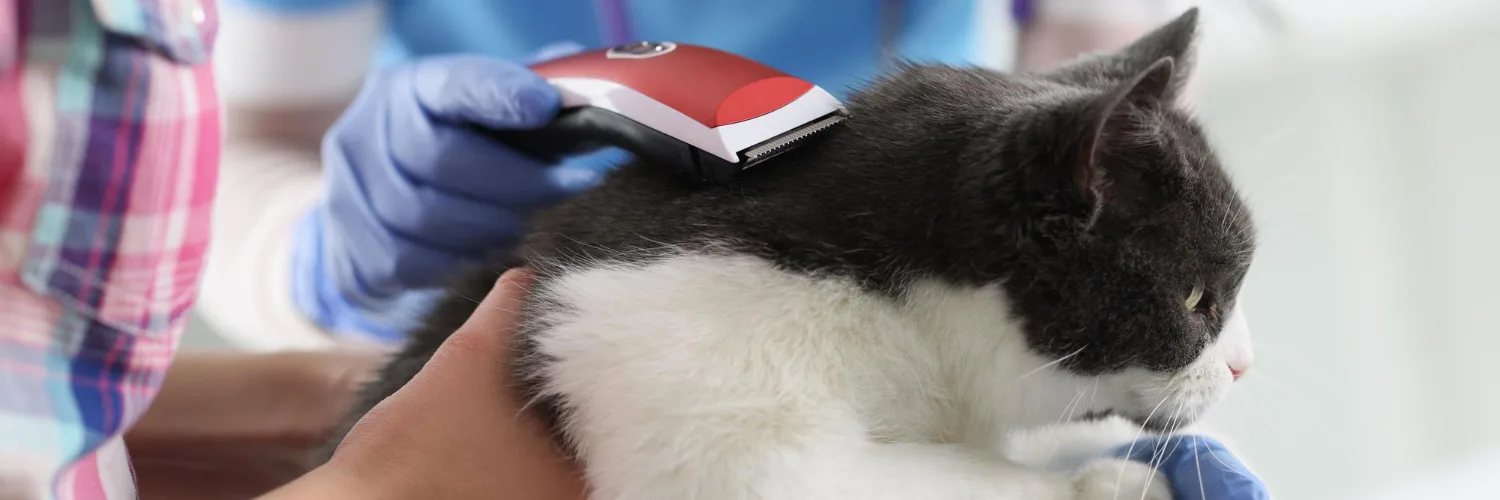
A heavily matted cat sometimes cannot be groomed conscious at all. When the coat has felted into a shell, safe removal means clipping under sedation with a veterinarian involved, because the blade has to pass between a tight mat and inflamed skin without the cat moving.
We do not say that to sell a longer appointment — it is the point at which the work carries genuine risk of injury and the skin underneath needs assessment as well as clearing. It is also worth a proper examination rather than just a shave: a cat who suddenly stopped grooming herself was usually telling you something, and dental pain, arthritis and weight are the three answers we find most often. That side of it is on our cat vet page.
What actually works
Short and frequent combing beats a long, thorough session. A few minutes several times a week, reaching the skin rather than skimming the top, does more than a half-hour once a month — and it keeps her tolerant of being handled, which is worth as much as the combing.
Work the four places that mat first: behind the ears, the armpits, the back of the thighs, and the base of the tail. Use a comb rather than a slicker brush as your test — a brush glides over the top of a forming mat and leaves you believing the coat is clear. And once a mat is tight against the skin, leave it to somebody who removes mats for a living. What a professional session covers is on our cat grooming page.
What it costs
A basic cat groom is AED 69 and a full cat groom is AED 120. A coat that has gone past what a comb can clear has to be assessed before anybody clips it, and that assessment is an ordinary veterinary consultation — also AED 120 — with the clipping itself quoted afterwards, once the skin underneath has been seen. Those are published prices rather than estimates, and the rest of the list is on our grooming prices page.