
Reading Cat Food Labels in the UAE: Choosing the Best Food for Cats
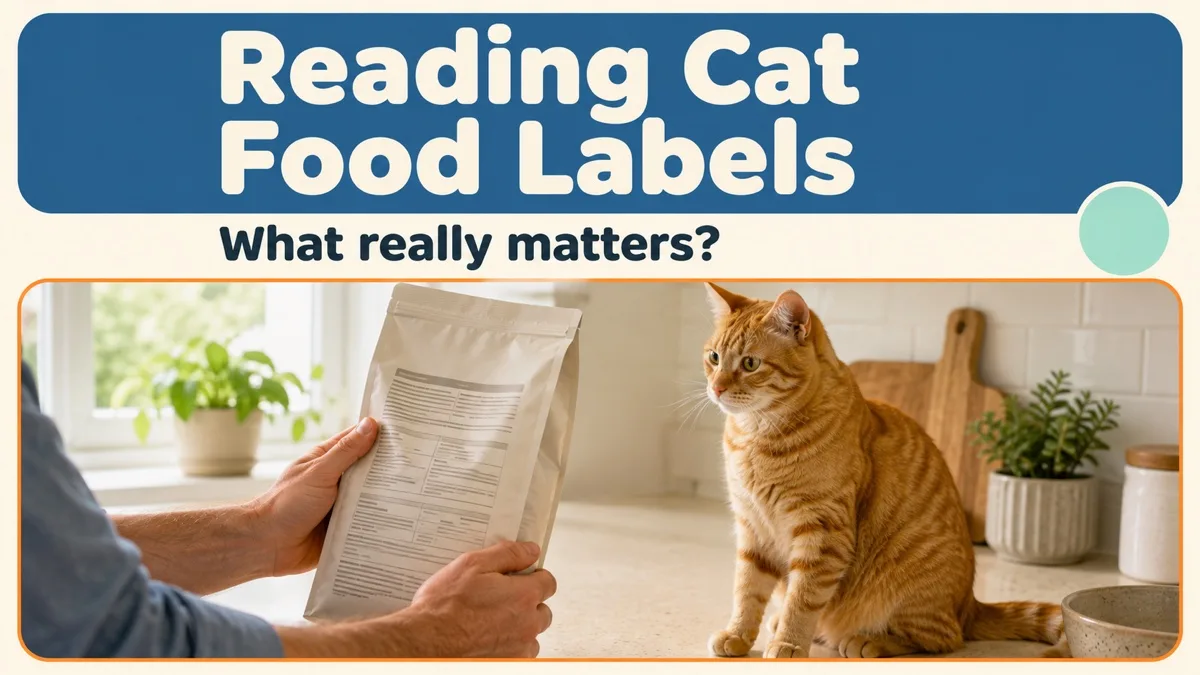
Walk down the pet aisle in any Dubai supermarket and the bags are shouting. Grain free, salmon and sweet potato, holistic, vet formulated. Almost none of that is regulated language, and none of it answers the only question that matters — whether the bag in front of you is complete enough to be the only thing your cat eats for the next year. That is what choosing the best food for cats actually comes down to.
The information that answers the question is on the back, in small print, in three or four specific places. This page is about finding those places and ignoring the rest. It names no brands, partly because what is stocked here changes without notice, and partly because the honest answer to “which bag” depends on the cat in the room rather than on a ranking.
The front of the bag is advertising, the back is closer to regulation
Photographs of chicken breast, the word premium, a green leaf motif — these exist to move the product, and no authority checks them. The back panel is different. It carries a small set of statements that manufacturers writing to the American or the European standards have to make in a defined form, and those statements are the only part of the packaging doing any work for you.
Three of those statements are worth finding, and locating them takes about a minute once you know where to look.
The adequacy statement is the one line worth hunting for
Somewhere in the small print there should be a sentence saying the food is complete and balanced for a named life stage: growth, adult maintenance, or all life stages. That sentence is the manufacturer stating that the food can be fed as the only diet without something being missing from it.
A food described instead as complementary is not making that claim. Many pouches, toppers and most treats fall into this category, and they are perfectly legitimate — they are simply not designed to be the whole diet. Feeding a complementary food as though it were complete is one of the few genuine nutritional mistakes an owner can make without ever being told about it.
Bags sold here arrive from several regions, so the statement may be written to an American or a European standard depending on where the food was made. Both are real standards and either is a reasonable thing to see. What matters is that the sentence exists somewhere, and that the life stage it names matches the cat you are feeding — kitten food fed to an eight-year-old is a slow overfeeding problem, not a treat.
Ingredient lists tell you less than owners think
Ingredients are listed in order of weight before cooking, which means fresh meat — most of which is water — sits higher in the list than the amount surviving into the finished kibble justifies. The same protein can also appear split across several entries, pushing each one further down and a grain further up. Neither practice is dishonest, and both make the list a poor ranking tool.
What the list is genuinely useful for is exclusion — if you are working through a suspected reaction to a particular protein with your vet, the panel tells you whether that protein is in the bag. As a way of ranking one food against another it is close to useless. Cats are obligate carnivores, but you cannot read digestibility off a printed list.
Moisture is why two panels cannot be compared side by side
The guaranteed analysis prints protein, fat, fibre and moisture as percentages of the food as it comes out of the packet. A dry food is roughly a tenth water; a wet food is roughly three quarters. Comparing the protein figure on a tin directly against the figure on a bag therefore compares two things measured on different scales, and the tin will always look worse than it is.
Moisture matters for a second reason in this country. Cats evolved to take most of their water from prey and have a weak thirst drive to match, and a cat living permanently in air conditioning, eating only dry food, is running at the dry end of everything. That is one of the reasons wet food earns its place in a Dubai flat even when the dry food is excellent — not as an upgrade, but as water your cat will actually take in.
What the shelf here actually offers
Availability is a real constraint and deserves to be part of the decision. The same brand may be imported in different formulations depending on the country of manufacture, stock disappears for weeks when a shipment is delayed, and a food you commit to in October may be unobtainable in February. A mid-range food you can reliably buy again beats an excellent one you will be forced to switch away from, because repeated switching makes it impossible to tell what caused what.
Two practical habits help. The importer’s sticker sometimes covers the printed batch code and production date — if you cannot read them, ask at the counter or choose a bag whose date is legible, because a food you cannot date is a food you cannot rule out later if something goes wrong. And when you find something that suits her, buy the next bag before the current one runs out rather than after, so a supply gap never forces an abrupt change.
Heat and humidity age an opened bag faster than the date suggests
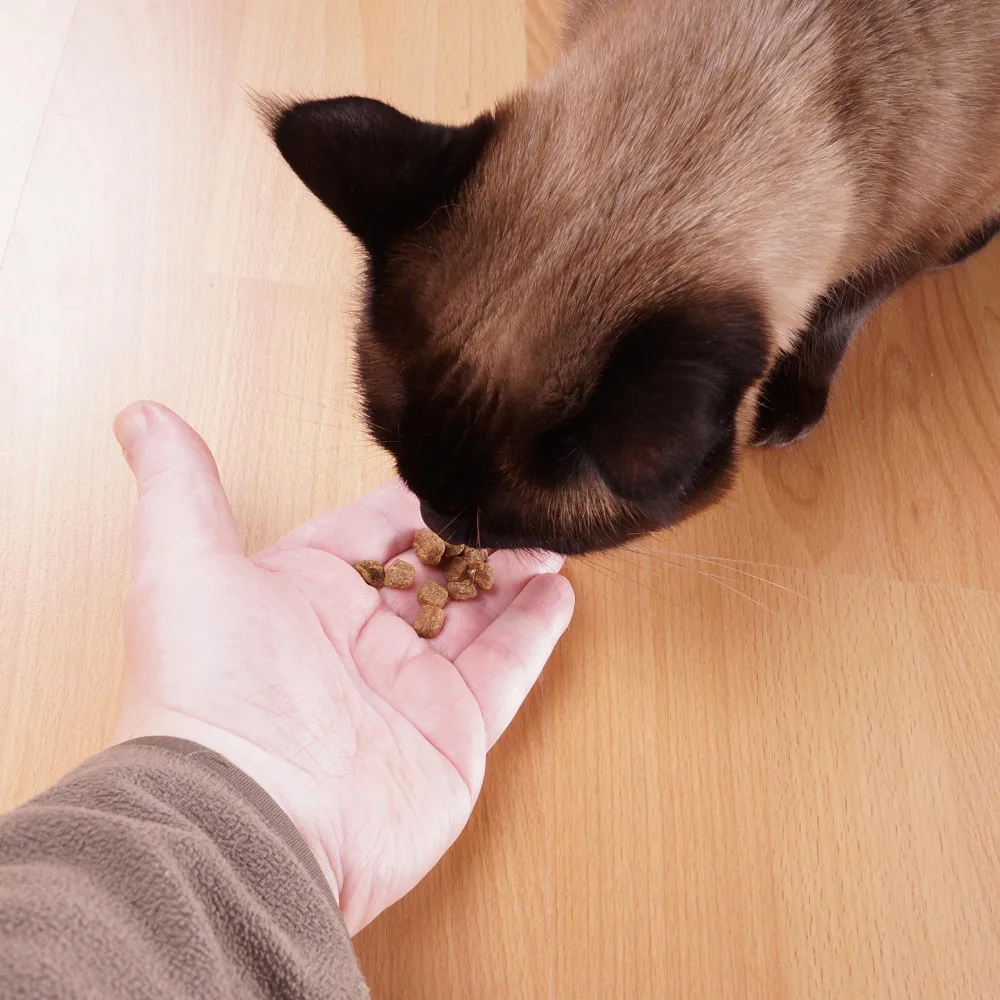
The fat sprayed onto kibble to make it palatable is the first thing to go off, and it oxidises faster in warmth. A bag opened and left in a hot kitchen, a storeroom or — worst of all — on a balcony can turn before the printed date arrives. Cats then refuse it, and the refusal is read as fussiness rather than as a cat correctly declining stale food.
Keep the food in its original bag, roll the top down, and put the whole bag inside a sealed container rather than tipping the kibble in loose. The bag is a barrier the container is not, and it carries the batch code you would need if there were ever a problem. Buy sizes you will finish in a few weeks rather than the largest one on offer, and never leave a bag in the car. Wet food is stricter still: in a Dubai flat, what is left in the bowl is spoiling within the hour, not the afternoon.
The label cannot tell you the portion
The feeding chart on the back is a range calculated for an average animal, and the average animal does not live in your flat. Two cats of the same weight can need noticeably different amounts depending on age, whether they are neutered, and how much of the day is spent moving rather than asleep on the sofa. The chart is where you start, and the cat is what you adjust to.
Setting and adjusting that portion is its own subject, and the general version of it — including how it works for dogs, whose energy needs swing much harder with the seasons here — is on our page about how portions are set.
What it costs
At Petbook we read the bag with you rather than instead of you: the panel goes next to the cat on the table, and what comes out of it is a weight, a body condition score and a written note of what she is actually eating, which together are the beginning of the only feeding chart that describes her. The consultation it happens inside is AED 120, a published price rather than an estimate.
If answering the question properly needs blood or urine testing — a food problem and an early medical problem look identical from the outside — that is quoted on its own, so message us on WhatsApp for a same-day quote. The measurement itself is part of every wellness exam.
When the label is not the problem
A cat who suddenly refuses a food she has eaten happily for months is telling you something, and the bag is only the first place to look — the second is her mouth. Weight coming off while the bowl empties normally, drinking noticeably more than she used to, or vomiting after most meals are all questions for an examination rather than for a different flavour.
The pattern we see most often is an owner who has changed food four times in three months chasing a symptom that was never nutritional. Change one thing, give it a few weeks, and if the animal is not right, bring her in instead of buying a fifth bag. What that appointment involves is on our cat vet page.